
What does Black history mean as a designer in the AEC industry? For three Lawrence Group designers, their journeys into the industry are deeply rooted in history, community, and purpose.
Meet Dallas
For Dallas Brooks, her journey into the AEC industry is grounded in purpose. Her education at Howard University sharpened her understanding of how historic inequities continue to shape the communities we design for today. It reinforced a powerful truth: architecture isn’t just about buildings—it’s about responsibility. Being intentional about who we design for and gathering community input early in the process are practices she believes should be central to every project and hopes to continue as she grows in her career. Dallas began her journey with Lawrence Group as an intern, which later led to an immediate offer for a full-time position.
Meet Sydney
For Sydney Mitchell, Black history is a deep source of pride and something she returns to in times of uncertainty. Learning about the resilience and achievements of those who came before her reminds her of what’s possible and reinforces what she is capable of—especially in an industry where Black professionals remain underrepresented. Looking ahead, Sydney hopes to see a field shaped by greater diversity—one that thrives on different perspectives and designs more thoughtfully for all people. Black history doesn’t just reflect the past; it pioneers the future by inspiring others to pursue, achieve, and open doors of opportunity for everyone. Sydney joined Lawrence Group shortly after graduation, entering the profession through her extensive network.
Meet Raven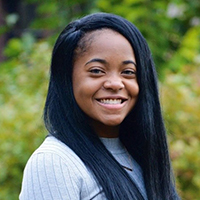
For Raven Crawford, learning about Black history instilled the courage to be the first—or even the only—in the room. Growing up without much Black representation in the design industry, she searched for examples of possibility. She found inspiration in Ruby Bridges, whose bravery at just seven years old demonstrated how one person’s strength can create generational change. As the first of her siblings to pursue a creative career, Raven is grateful for the freedom to study what she loves and build a future rooted in design. That opportunity is not lost on her. She approaches her work with the belief that design is meant to serve everyone. Her goal is to create spaces where all people—regardless of background—feel safe, comfortable, and valued.
The Importance of Exposure and Mentorship
Dallas credits her family’s legacy of HBCU graduates for shaping how she sees the world. “I was always surrounded by examples of Black excellence,” she reflects, even when the world outside her home didn’t mirror that representation. A defining moment came when she visited her grandmother’s childhood neighborhood in Dunleith, Delaware—the first subdivision in the county to offer new housing to African American veterans in 1951. Seeing her family’s history preserved there made her realize, “I am both part of and shaped by Black history.”
That experience solidified her understanding that architecture can directly impact lives and create generational stability. In college, exposure to diverse communities deepened her awareness of how zoning, public space, and development decisions affect access and equity.
For Raven, representation is both personal and forward-looking. Her graduation milestone—celebrated alongside her family—symbolizes more than academic achievement; it represents expanded opportunity. She understands that visibility matters. By stepping confidently into the profession, she hopes to widen the pathway for others considering careers in design.
Sydney draws inspiration from seeing people who look like her in spaces where representation is rare. Reflecting on her early college experience at a predominantly white institution, she shares, “There was excitement—but also pressure to prove myself in a space where I shouldn’t have had to.” Over time, she came to see that experience as part of a larger legacy of Black history: pioneering, showing up, and making space through presence alone.
Raised on the North Side of St. Louis, Sydney witnessed both systemic underinvestment and unwavering togetherness. That foundation shapes her philosophy today: “Design is about people. When we design with community in mind, we strengthen the whole.”
Message for the Future Generation of Designers
For Dallas, leadership begins with authenticity. “Always be yourself,” she advises, emphasizing that strong leaders don’t diminish who they are to fit into a room—they expand the room by bringing their full perspective to it. Mentorship has been central to her growth. Through internships, networking, and involvement beyond the classroom, she gained real-world insight and the confidence to navigate the transition from academia to practice. These experiences not only sharpened her technical skills but also shaped her understanding of responsibility within the profession. Inspired by her mother’s advice to “bring someone with you” whenever you walk through a door, Dallas views leadership as collective progress through creating opportunities, guiding others, and ensuring the next generation feels seen, supported, and empowered to lead.
Sydney encourages emerging designers to expect discomfort—but not to let it define them. Reflecting on being the only one who looked like her in the room, she shares, “What truly holds you back isn’t discomfort—it’s the doubt that grows from it.” A quote that continues to ground her is, “The opportunity wouldn’t present itself if you didn’t belong.”
Her confidence was built early through programs like Girls Inc. of St. Louis, where the motto “Strong, Smart, and Bold” introduced her to STEAM education, leadership, and long-term mentorship. Participation in leadership programs and academic achievement at Cardinal Ritter College Prep High School, including becoming class valedictorian, prepared her for higher education and a career in architecture at Southern Illinois University Carbondale.
Raven echoes that encouragement. Be brave enough to be first. Be confident enough to ask questions. And remember that your presence alone can spark change for those who follow.