Lawrence Group has designed a suite of three restaurant concepts for James Beard recognized Chef Bradley Kilgore located on the Transamerica Pyramid site in San Francisco. The project encompasses the entire ground floor of the Transamerica 3 building and opens onto historic Mark Twain Alley and Sansome Street.
At the base of San Francisco’s most iconic architectural landmark, the Transamerica Pyramid, ama presents a new model for bar-led hospitality—one rooted in atmosphere, cultural memory, and intentional restraint. Comprising of two distinct concepts within a shared space, the project channels a mood-forward blend of 1970s glamour and intimate maximalism, offering distinct yet interconnected experiences that move seamlessly from refined dining to late-night social ritual.
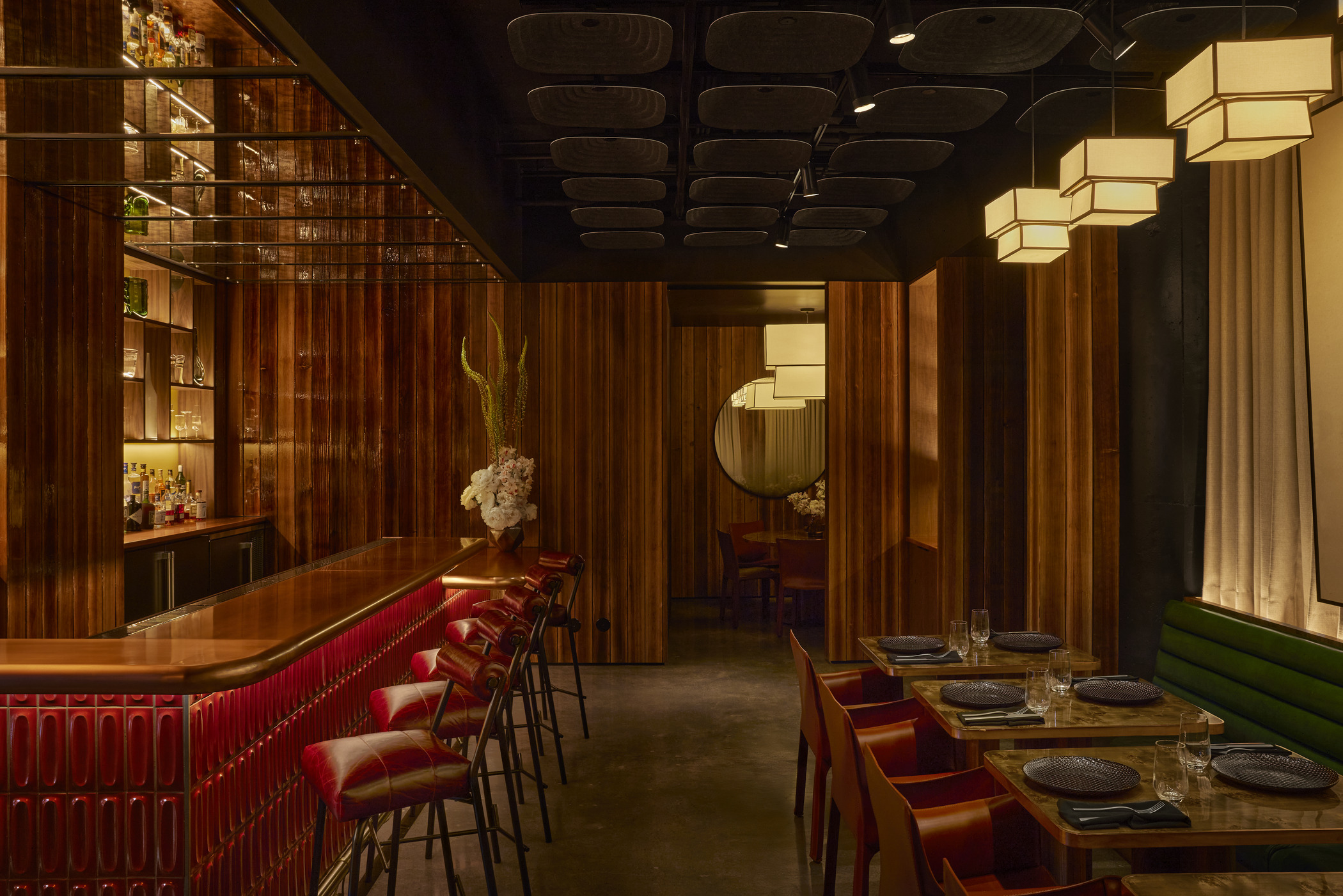
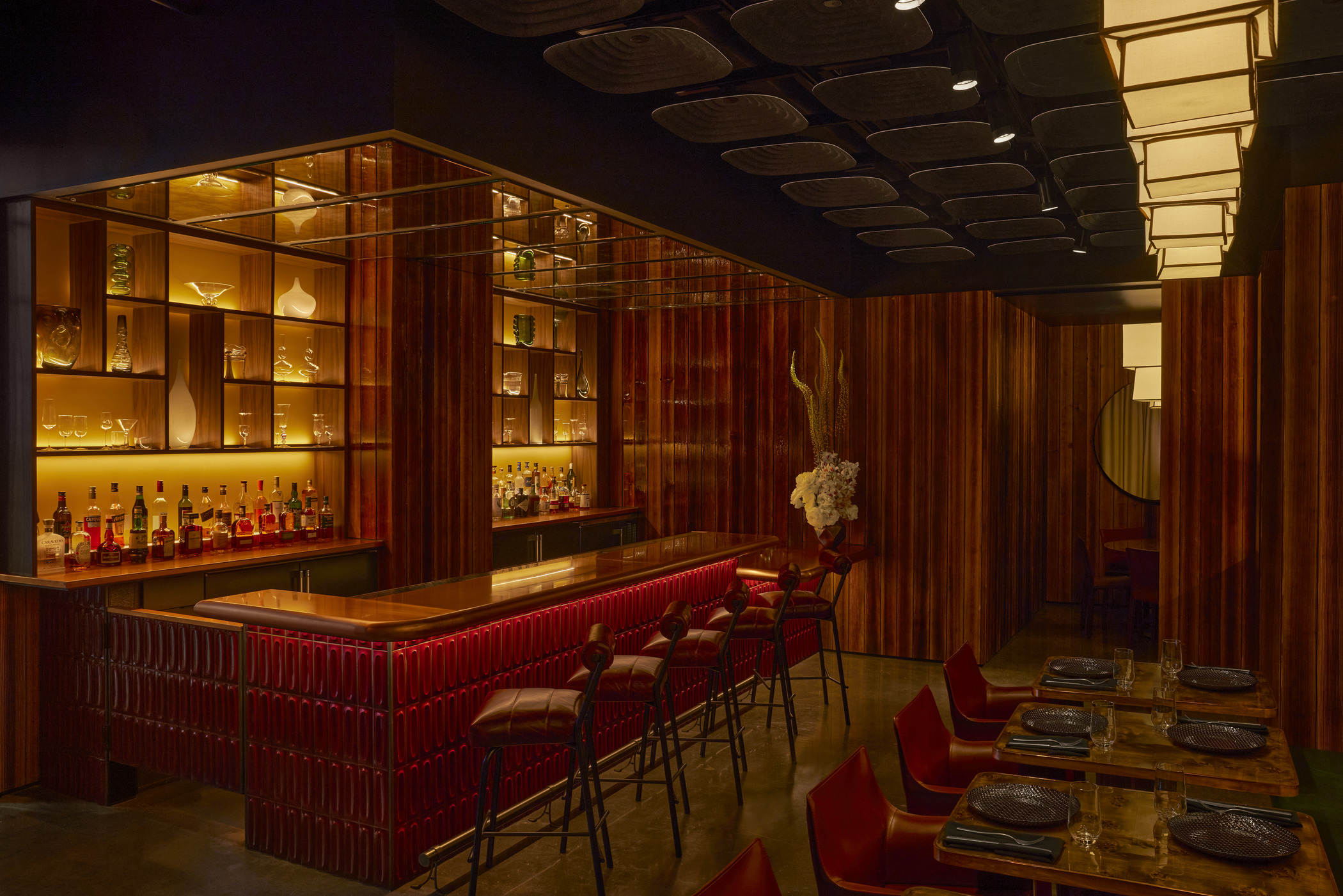
The project’s front dining room —the Copper Room—is anchored by a monolithic copper bar top that serves as both functional centerpiece and emotional compass. The bar was conceived as a grounding presence—warm, tactile, and quietly luminous. Its surface offers a muted but effervescent reflectivity, subtly shifting with candlelight, cocktails, and movement throughout the night.
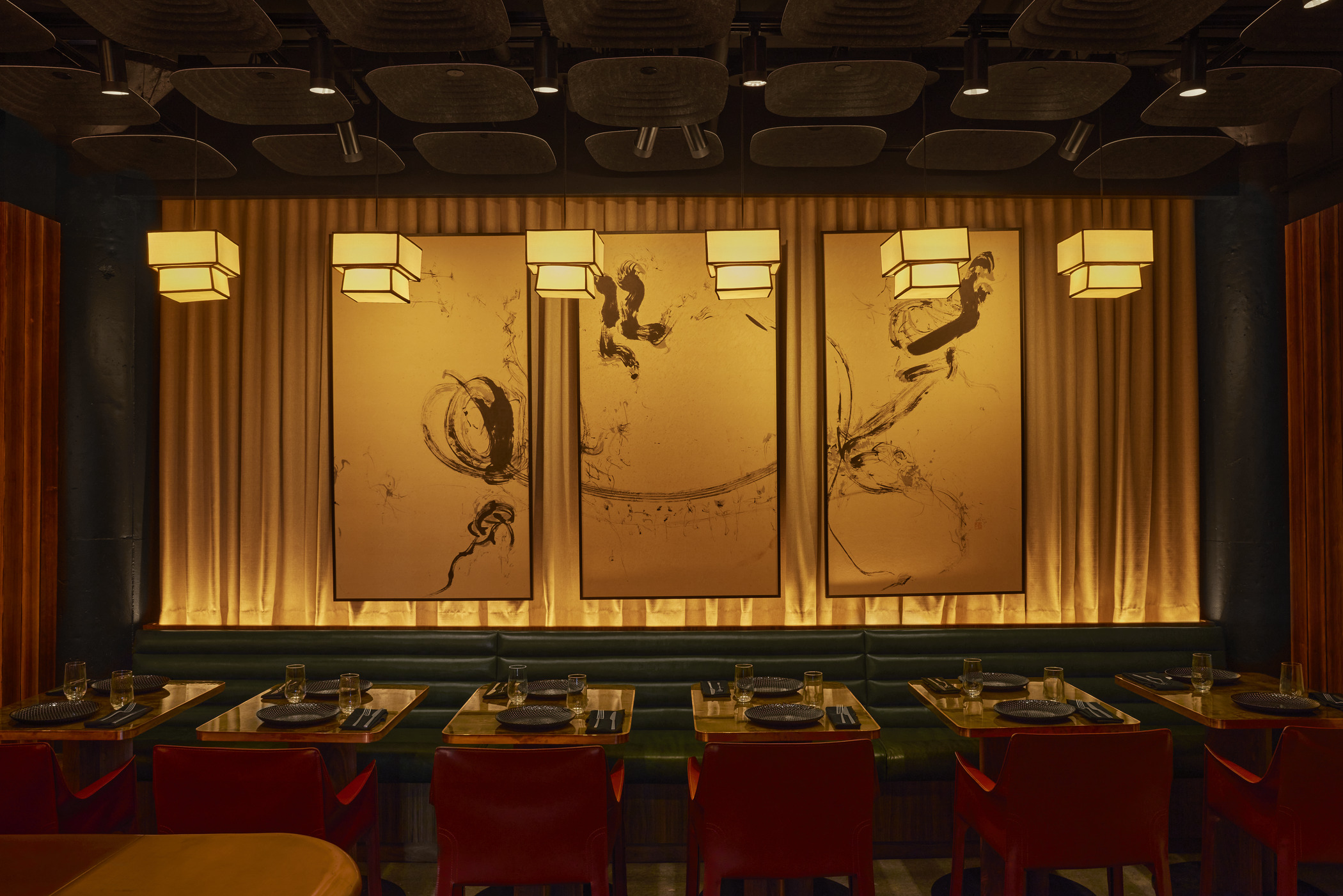
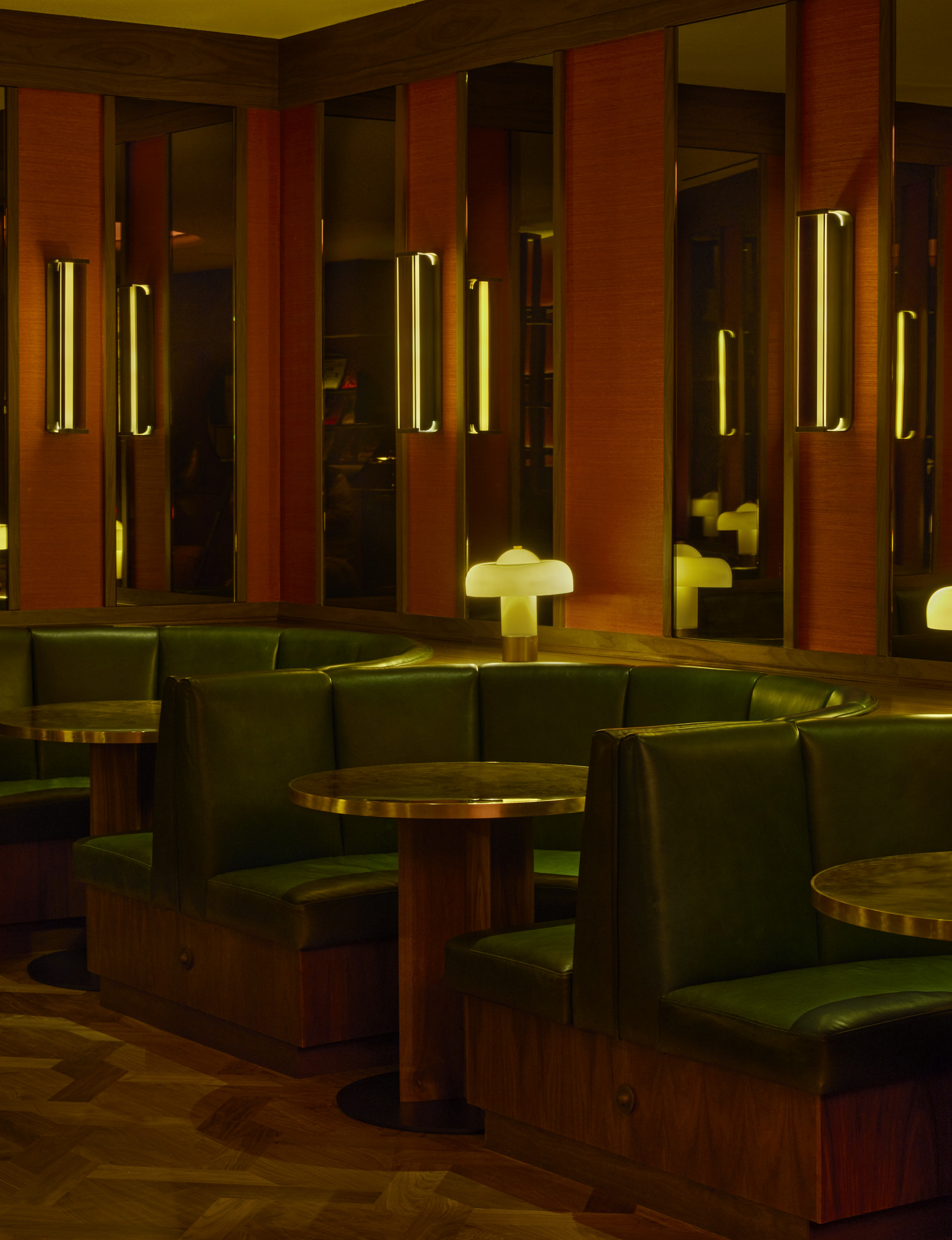
Surrounding the bar is a richness of materiality that defines the space: sho shugi-ban wood wraps the perimeter walls, drawing abstract inspiration from the redwood grove just outside in Transamerica Redwood Park. Textured blood-red ceramic tile anchors the bar, adding depth and warmth, while forest green leather banquettes paired with burled wood tables—each wrapped in a solid brass frame—introduce a measured sense of opulence without excess. Above the banquette hangs a hand-painted Mingei Japanese triptych from 1974—a precise, understated nod to the restaurant’s Japanese influences and culinary philosophy of Itameshi fusion cuisine.
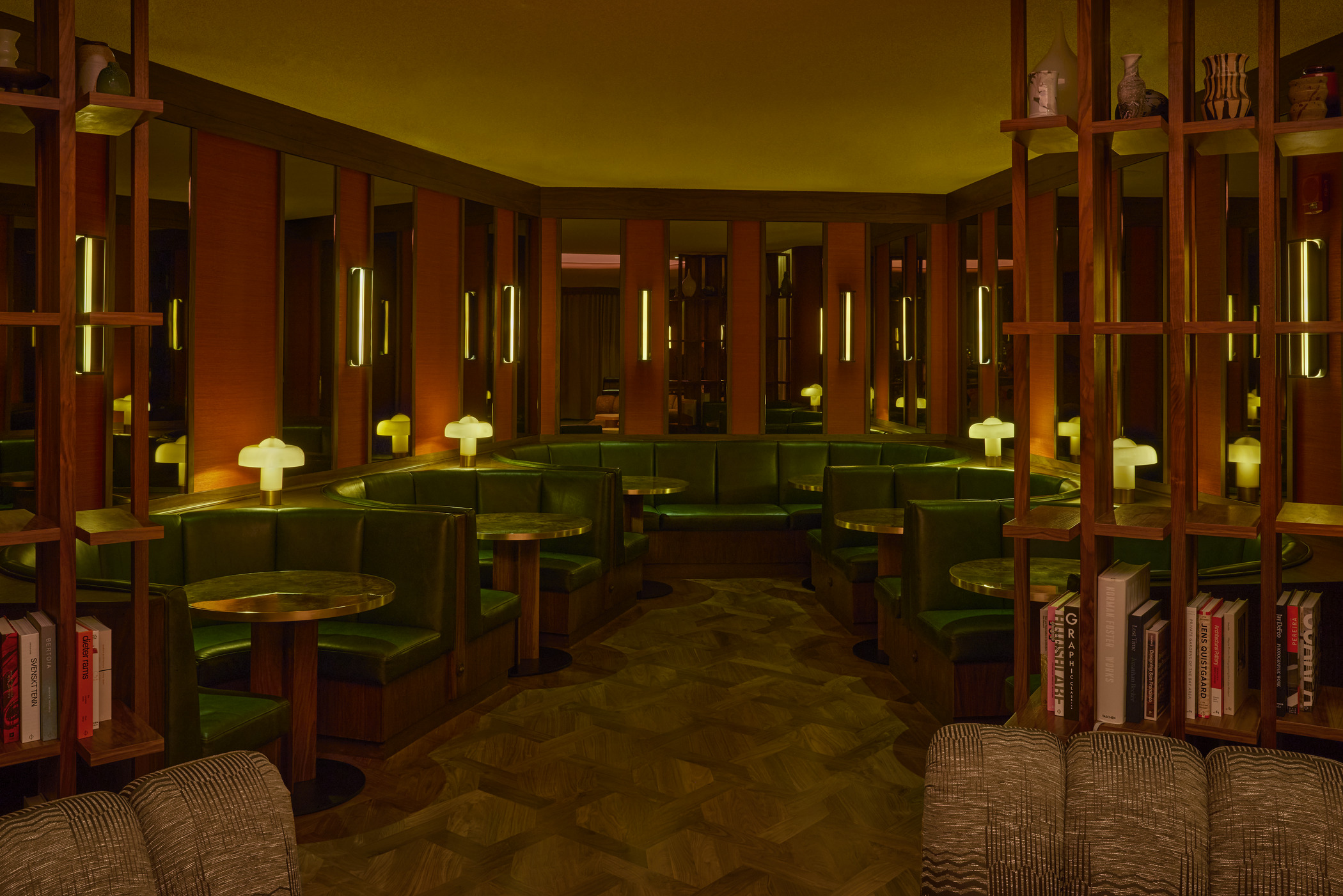
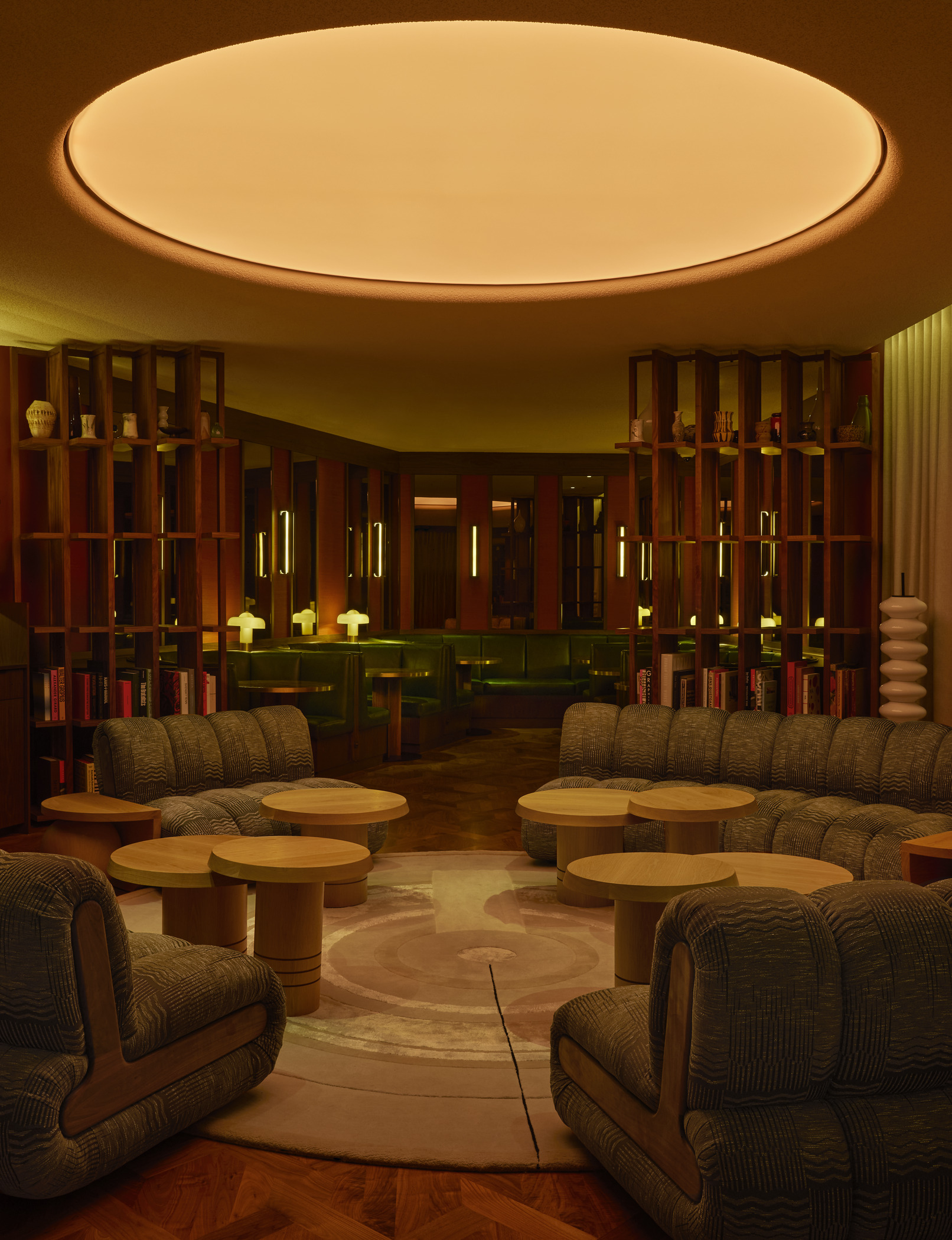
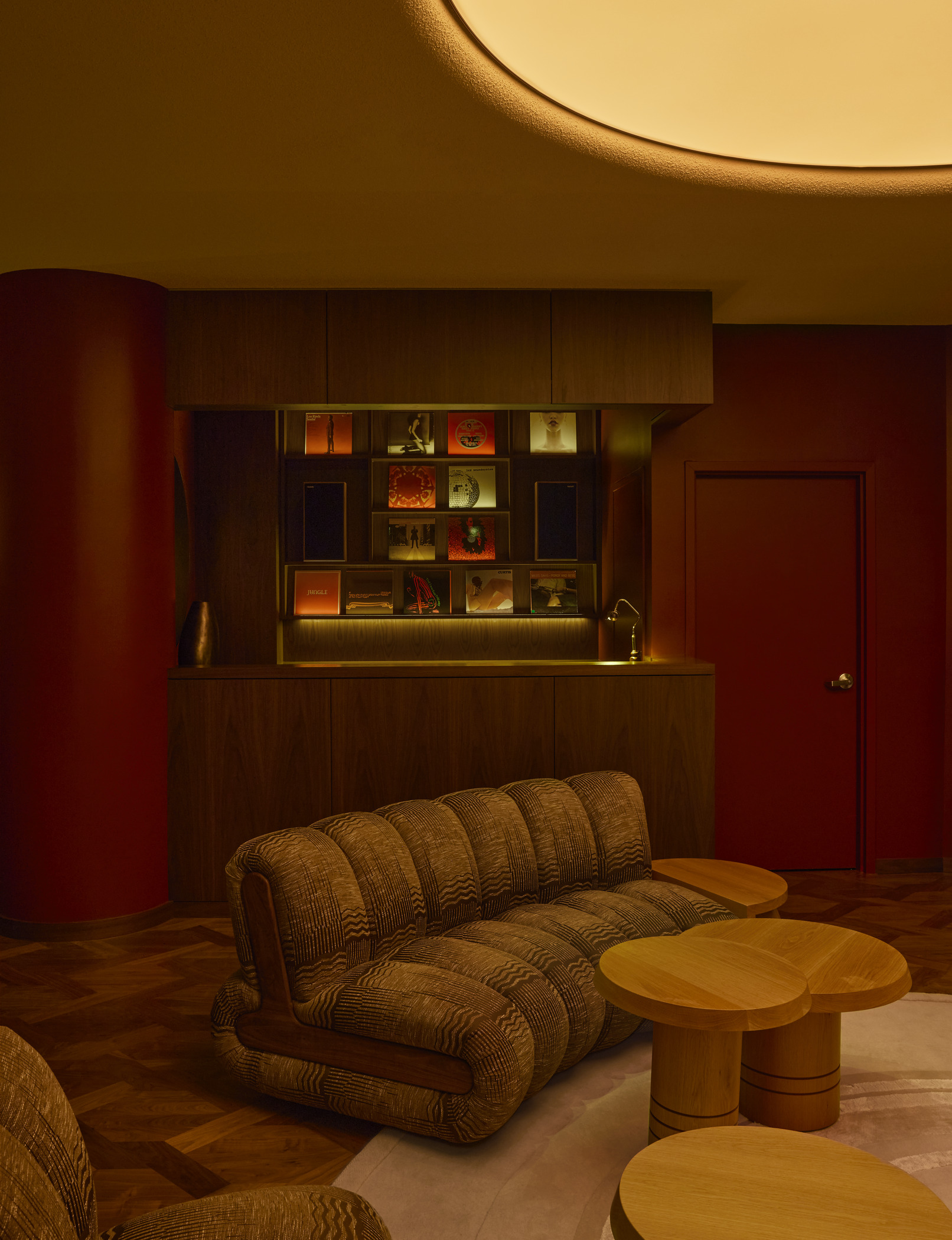
Discreetly hidden behind the main restaurant, the Social Club is designed to spark delightful surprise before gradually settling into playful comfort. At its center is the Social Club’s defining element: a dramatic oculus light dome. Suspended above a midcentury-inspired seating group, the oculus has a supernatural depth that subtly elevates the perceived ceiling height. Its curvature integrates it seamlessly within the architecture while maintaining a low profile, resulting in a focal point that feels both futuristic and timeless. The oculus is juxtaposed against a popcorn spray ceiling finish, nostalgically referencing 1970s interiors while serving as a study in contrast: old meets new, playful meets precise. This tension is central to the Social Club’s identity.
The perimeter of the room is lined with intimate banquettes, subtly divided by floor-to-ceiling bookcases that create moments of privacy without full separation. Four vintage pinball machines further evoke nostalgia and spontaneity, while a central DJ booth allows the space to effortlessly transition into a late-night, music-driven environment.
Importantly, the Social Club is designed to support human connection. Every table features a small card bearing the Japanese proverb ichi-go ichi-e—“one time, one meeting”—encouraging guests to be fully present. This philosophy is reinforced architecturally through low lighting, close seating, and a layout that favors conversation over spectacle.
This project demonstrates that great bar design isn’t about visual excess—it’s about creating spaces where people want to stay, connect, and return. In an era of fast openings and louder concepts, these spaces offer something sexy, deeper, and ultimately more enduring.
Lawrence Group worked with Kevin Klein Design on the interior design. https://www.amabybradkilgore.com/